
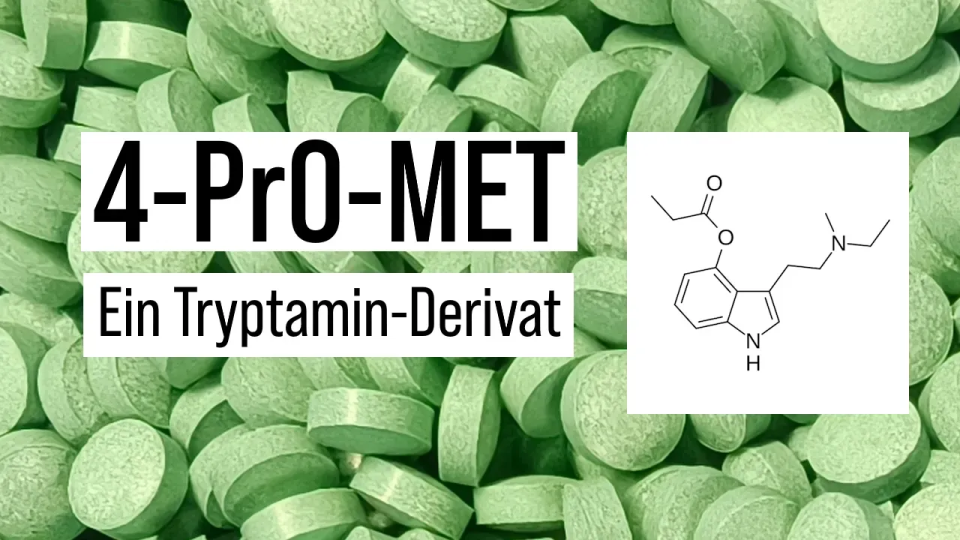
4-PrO-MET (spelled out: 4-propionyloxy-N-ethyl-N-methyltryptamine) is a modern molecule from the tryptamine group that is currently being investigated in chemical research. This class of substances is particularly interesting for research because the tryptamine core structure serves as a versatile building block whose chemical properties can be altered in a targeted way through minimal modifications.
Structural formula of 4-PrO-MET:
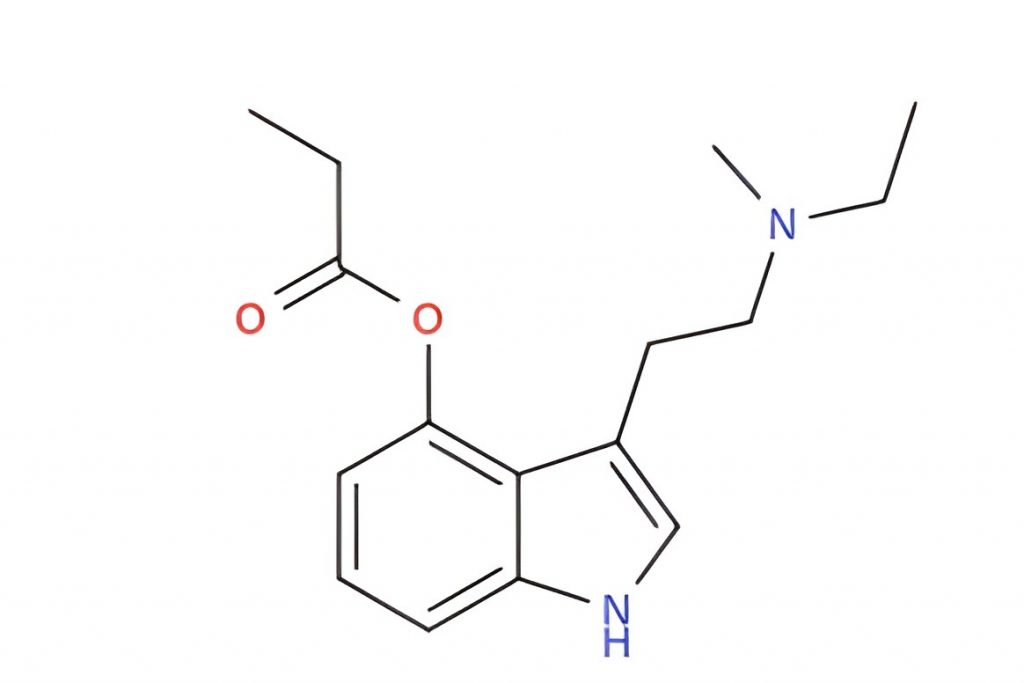
4-PrO-MET is derived from 4-hydroxy-tryptamine. The best-known representatives of 4-substituted tryptamines include, for example, 4-HO-DMT (psilocin) or psilocybin-i.e., molecules that are particularly exciting for researchers when it comes to the structure and properties of tryptamines. Since 4-hydroxy tryptamines are extremely unstable, the 4-hydroxy group was stabilized by a propionic acid ester. Furthermore, the tryptamine was isolated in the form of a fumarate salt, which is another plus in terms of stability. Thanks to these two tricks, we can now provide the researcher with a storage-stable, protected 4-hydroxy derivative.
What many people don’t know: tryptamines are nothing foreign to us. In addition to psilocin and psilocybin, 4-PrO-MET is structurally related to DMT, bufotenin, and even the body’s own neurotransmitters:
They all share the same core structure, but differ through small attachments on the molecule. Because of this relationship, 4-PrO-MET is ideal for comparative studies.
Why are there so many different tryptamines? You can think of it like a Lego building set:
4-PrO-MET is particularly exciting because it has a specific modification on the molecule (the so-called propionyl group). You can think of it like a protective shield.
This protective shield can make the molecule, in its pure form, potentially more stable and more lipophilic (fat-soluble) than related substances. The fascinating research field here is so-called hydrolysis:
Put simply: chemists investigate under which conditions (e.g., in certain solutions or upon contact with enzymes in a laboratory experiment) this protective shield is cleaved off.
When that happens, the molecule converts back into its base structure (4-HO-MET). This conversion process is a classic example of dynamic chemistry and helps researchers understand how stable such compounds actually are.
According to the current status (February 2026), 4-PrO-MET is not listed in the German Narcotics Act (BtMG).
The specific chemical structure of 4-PrO-MET is also currently not included in the NpSG annex covering tryptamines.
This means: 4-PrO-MET may currently be legally traded and investigated for research purposes.
However, since laws can change, we recommend checking the current status regularly.
Note: This information does not replace legal advice.
To keep 4-PrO-MET stable over the long term, it should be stored in a cool, dry place and protected from light. It is also important to seal containers airtight to avoid contact with humidity. Under normal research conditions, it is sufficient to store the material at room temperature and protected from direct sunlight. This keeps the substance quality stable and well controllable over longer periods of time.
For long-term storage (many months to years), 4-PrO-MET can also be stored in the refrigerator.
4-PrO-MET is an exciting tryptamine that offers researchers new opportunities to investigate structure, stability, and properties within this molecule class.
Properly stored and sourced from reputable suppliers, it remains a valuable research chemical—especially for laboratories working on modern tryptamine analyses.